Are Flock Camera Locations Public? Public Records, FOIA & Transparency Portals
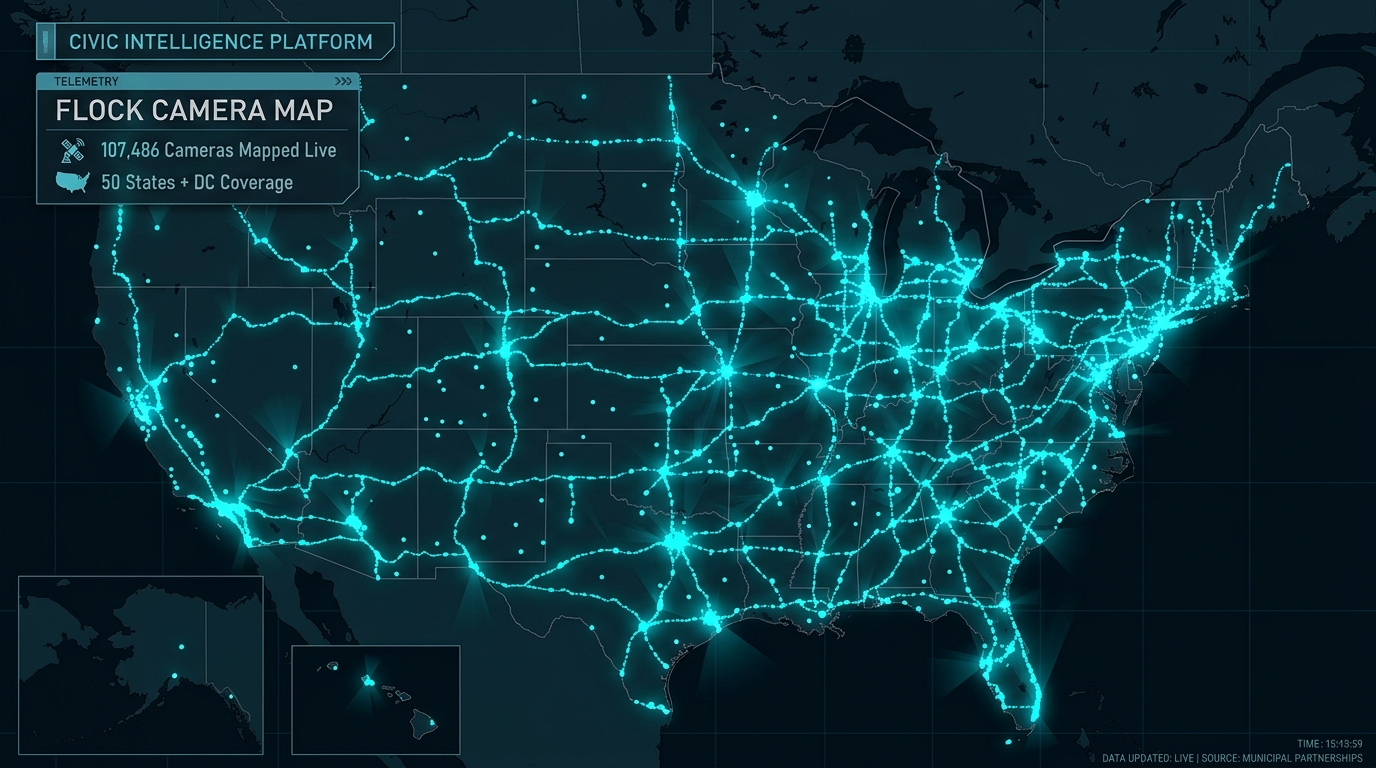
Immediate Answer: Are Camera Locations Public Information?
Yes, the locations of government-operated Flock Safety cameras are public records under state Freedom of Information Act (FOIA) laws. Because municipal police departments and county sheriffs fund these cameras using public tax dollars, the contracts, installation invoices, site surveys, and camera lists are public government records.
However, neither Flock Safety nor law enforcement agencies maintain a unified, publicly accessible national map of all camera coordinates. A small percentage of progressive police departments publish municipal Transparency Portals disclosing camera counts and search policies, but the exact geographic coordinates are typically uncovered through community audits or public records requests.
Furthermore, cameras purchased by private entities (such as Homeowners Associations, gated subdivisions, and commercial shopping centers) are situated on private property or private utility easements and are generally exempt from public records laws.
State-by-State Public Records Statutes Governing ALPR Disclosures
Every U.S. state maintains freedom of information statutes that empower citizens, journalists, and researchers to request government records:
- California Public Records Act (CPRA, Gov. Code § 7920 et seq. / SB 34): Mandates that all ALPR operating policies, procurement contracts, and search audit guidelines must be publicly disclosed.
- Texas Public Information Act (Tex. Gov't Code § 552): Explicitly categorizes municipal vendor contracts, purchase orders, and camera site schedules as open records.
- Georgia Open Records Act (O.C.G.A. § 50-18-70): Requires local agencies to release contract invoices and camera inventory lists within three business days.
- Florida Sunshine Law (Fla. Stat. § 119): Guarantees access to municipal procurement documents, though active criminal intelligence is redacted.
- Illinois Freedom of Information Act (5 ILCS 140): Mandates disclosure of public agency equipment inventories and municipal council voting records.
The "Tactical Law Enforcement" Exemption Myth
When citizens submit records requests for Flock camera inventories, police departments occasionally deny disclosure by asserting statutory exemptions for "law enforcement investigative techniques" or "tactical deployment plans."
State courts and Attorneys General have repeatedly rejected blanket secrecy:
- California (EFF & ACLU v. LAPD / LASD, 2017): The California Supreme Court held that automated license plate reader data and policies cannot be withheld under catch-all exemptions.
- Texas Attorney General Rulings: The Texas AG has consistently ruled that fixed camera locations installed in plain public view do not qualify as confidential tactical secrets.
- Public Infrastructure Doctrine: Cameras mounted in plain view on public rights-of-way, roadside utility poles, and city streetlights cannot be classified as confidential undercover operations.
The Flock Transparency Portal Ecosystem
Flock Safety offers police departments an optional public dashboard feature hosted at transparency.flocksafety.com.
What these portals disclose:
- Total number of active Flock cameras operated by the agency.
- 30-day vehicle scan totals.
- Total hotlist alert hits (stolen vehicles, amber alerts, warrants).
- Stated departmental retention policy (typically 30 days).
- Number of authorized search queries conducted by officers.
What these portals withhold:
- Exact GPS coordinates of individual camera poles.
- Lens direction (azimuth) angles.
- Inter-agency data sharing lists (which other departments can search the feed).
- Search justification details for individual queries.
The Private HOA Carve-Out
A critical legal distinction exists between government and private cameras:
- Private HOA Cameras: Homeowners associations are private non-profit corporations. Their internal board meeting minutes and camera purchase contracts are not subject to state public records laws.
- The Police Sharing MOU Exception: If a private HOA shares its camera feed with local police through Flock software, the Memorandum of Understanding (MOU) or sharing agreement held by the police department IS a public record subject to FOIA.
How to Submit a Public Records Request for Camera Data
To obtain camera locations and audit logs from your local city or county:
- Identify the public records custodian (City Clerk or Police Records Division).
- Reference the state open records statute in your subject line.
- Request specific document categories: master inventory lists, vendor invoices, operating policies, and 90-day search audit logs.
- Request electronic delivery to avoid paper printing fees.
- If denied, cite state Attorney General precedents establishing that fixed public surveillance equipment is not exempt.
Explore These Cameras On The Live Map
Search your state or city to see verified camera locations and vision cones in real time.
Frequently Asked Questions
Common questions addressed in this guide.