What Does a Flock Camera Look Like? Photos & Field Identification Guide
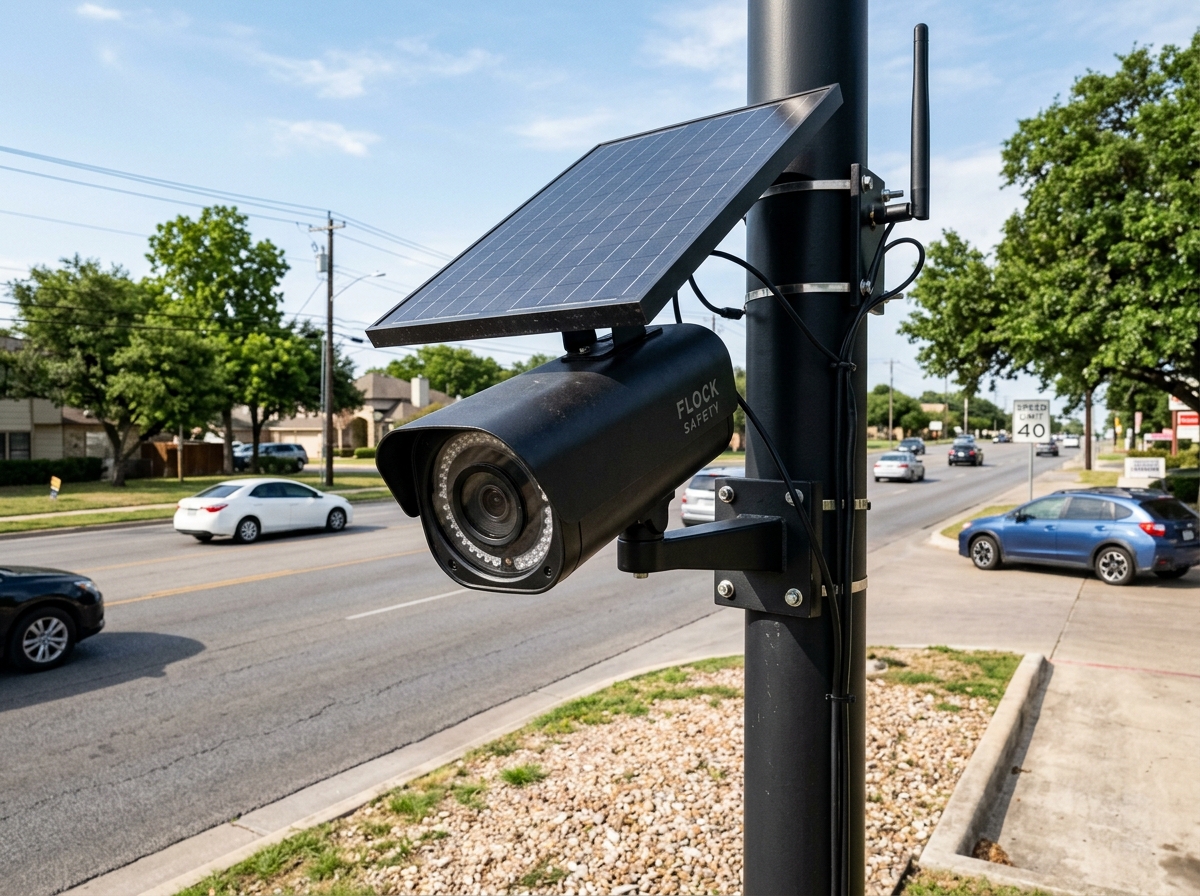
Immediate Answer: Key Visual Characteristics
You can identify a Flock Safety Falcon camera in the field by looking for four distinctive visual features:
- A matte black cylindrical housing (approximately 12 inches long and 4 inches in diameter) angled downward toward oncoming or receding traffic lanes.
- A dedicated rectangular solar panel (roughly 1.5 by 2 feet) mounted 1 to 2 feet above the camera head on the same pole.
- A standalone 10-to-14-foot round metal pole positioned at the roadside curb, median, or neighborhood entrance (or retrofitted onto existing utility poles and streetlights).
- No external power conduits or wires running to the ground, because the unit relies exclusively on its internal battery and solar charger.
Detailed Visual Breakdown: Component by Component
1. The Camera Enclosure
The main camera body is a cylindrical or slightly rectangular powder-coated matte black aluminum housing. On the front face, you will notice two circular glass apertures:
- Upper Optical Aperture: A high-resolution color CMOS sensor that photographs the vehicle's body, make, model, and paint color in daytime lighting.
- Lower Infrared Aperture: A specialized optical sensor surrounded by a circular ring of 850nm infrared LEDs designed to illuminate retroreflective license plate characters in complete darkness.
2. The Solar Array
Nearly 90% of Flock Falcon installations feature a dedicated solar panel mounted at the top of the pole. The solar panel is rectangular, measuring approximately 18 inches by 24 inches, angled between 30° and 45° to catch sunlight. If an installation is placed in heavy tree canopy or under bridges, Flock uses an AC power tap retrofitted into a nearby streetlamp photocell socket.
3. Pole Height and Placement
Unlike traffic monitoring cameras mounted 30 to 50 feet high on highway gantries, Flock cameras sit low to the ground—typically 9 to 12 feet high. This lower mounting angle ensures the camera lens aligns with the reflective angle of vehicle license plates and prevents vehicle roofs from blocking plate visibility.
4. Mounting Hardware
The camera is secured to the pole using heavy-duty steel U-bolts and an adjustable swivel mount. This allows technicians to calibrate the exact vertical tilt and horizontal azimuth angle toward traffic lanes.
Nighttime Visual Signatures: What Happens at Night?
Motorists frequently ask if Flock cameras flash bright lights at night:
- Zero White Strobe Flash: Unlike red light or speed cameras that emit bright, blinding white flashes, Flock cameras do not use visible white strobe lights.
- Faint Dull Red Glow: At night, the 850nm infrared LED illuminators produce an imperceptible infrared flash. If you look directly at the lens in pitch darkness from 15 feet away, you may observe a very faint, dull red glow from the infrared LEDs.
- Headlight Suppression: The infrared optical sensor uses specialized optical filters that ignore headlight glare, capturing only the retroreflective characters of the license plate.
Field Hardware Comparison Matrix
| Hardware Type | Physical Appearance | Power Setup | Mounting Location |
|---|---|---|---|
| Flock Falcon ALPR | Matte black cylinder, angled down, IR ring around lens | Small overhead solar panel (no conduit) | Neighborhood entrances, 2-lane roads, medians (10–12 ft high) |
| Flock Condor PTZ | Large white/grey dome camera with zoom lens | AC grid power or large solar trailer | Major commercial intersections and high-crime corridors |
| CCTV Traffic Camera | Large white or beige dome (PTZ) or box camera | Hardwired municipal power lines | Mounted 30+ feet high on highway gantries and traffic signal masts |
| Red Light / Speed Camera | Very large white/grey enclosure with tall flash box | Heavy underground electrical connection | Stop lines at major multi-lane intersections |
| Motorola Vigilant L6Q | Angular black or grey box with wide lens shroud | Solar or AC power bracket | Highway overpasses and high-speed multi-lane arterials |
Where Are Flock Cameras Positioned Relative to Traffic?
Flock cameras are placed at calibrated approach angles to maximize license plate readability:
- Distance from Roadway: Typically 5 to 15 feet from the edge of the travel lane.
- Azimuth Approach Angle: The camera lens is angled between 15° and 30° relative to the direction of vehicle travel.
- Focal Distance: The camera is calibrated to capture vehicles between 50 and 75 feet away.
- Traffic Direction: Cameras are usually aimed at the rear of vehicles to capture rear license plates (as many states do not require front plates).
Explore These Cameras On The Live Map
Search your state or city to see verified camera locations and vision cones in real time.
Frequently Asked Questions
Common questions addressed in this guide.